Showing posts with label rpg. Show all posts

Saturday, January 26, 2013

Mass Effect

I've come a long way on the notion of shooting things.  I really preferred my games with more slashing and less shooting.  Shooting requires precision, patience, planning... slashing a sword only requires - well, slashing.  But I've found that I have increasingly and increasingly been evolving to enjoy active combat and a weapon that can aim.

The Mass Effect series were the games that put Bioware on the map: a space opera series about Commander Shepard, human extraordinaire, and his ragtag group of adventurers.  Having finally been re-released for the PS3, the time was ripe to play and enjoy the series.


Monday, December 31, 2012

Star Ocean: The Last Hope (International)

Space Opera
Star Ocean: 'Til The End of Time was my first experience with the Star Ocean games, and was a great introduction to the series.  The Last Hope is a lot like 'Til the End of Time; you can read more about it after the jump...

Sunday, December 9, 2012

Final Fantasy XIII-2

Let's not kid ourselves.  I was not the biggest fan of Final Fantasy XIII when it first appeared, but a second play through really made me appreciate the game.  And even my first inclinations with its sequel (in demo form) were positive.  So how did Final Fantasy the Thirteenth Part 2 fair?  Hit the jump for the full details...

Monday, October 1, 2012

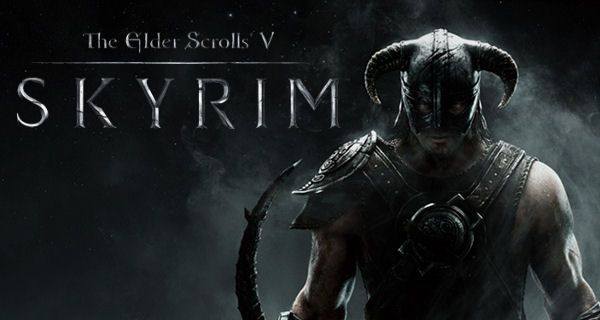
Skyrim


Skyrim, or more completely, The Elder Scrolls V: Skyrim continues the story of imprisoned-and-then-freed destiny-bound heroes of Tamriel, this time located in the frigid north, titular region: Skyrim.

The game was dense, as was the first draft of this review, which I have subsequently broken up into 5 entries (seriously).  Today's post looking at the main story and game mechanics, and subsequent posts dedicated to all the shit that got done in the name of collecting the sweet, sweet platinum trophy.

In media res being a bit of a gameplay-must these days, you start the game as an imprisoned man/woman/whatever on your way to the chopping block - the head chopping block - when you are serendipitously saved by the arrival of a fire-breathing dragon.  Amidst the chaos and fear of behading/being eaten by a dragon, you select your character's gender, race, and appearance.  Unlike the fourth Elder Scrolls entrant, you do not select a sign, have specifically anointed skills, or any of the other things that made that game have an astounding 743 sextillion (a lot) character builds.

The undead are a frequent encounter.
While skills continue to increase as you use them, the leveling system has been redesigned.  Now, gaining progress in any skill will move you towards a level-up, wherein you can increase your health, magicka (magic health), or stamina (swinging axe health).  Upon gaining a level, you are also able to select a perk from one of the skill areas, granted you have reached the requisite experience with that skill.  There are 251 perks in Skyrim, of which you may feasibly select 81 (essentially the "level cap").

I decided to put my perks into archery, sneaking, light armor, and Illusion-magic, which you think might have been setting myself up to be a total badass ninja, but I still chose to confront most conflicts at high velocity while spamming the attack key.

Combat is relatively unchanged from Oblivion, with the main exception in that you can wield magic while simultaneously wielding a weapon, or wield two spells at once.  Spells have also been pretty well nerfed, only dealing a set amount of damage and not able to be customized (a la Oblivion).

So, fresh off of not-being-killed-by-a-dragon, you are given the same mind-numbing freedom common to the Bethesda games: you could literally do anything.  Only a few story-related areas are blocked off, and to be honest - it's nearly impossible to find them, as there is just so much else to do.  The game improves upon Oblivion's compass system, and exploration begins to be "just... one... more... area..." and before you know it, you've mapped most of the locations in Skyrim.

Oh hey girl, lemme shout at you.
Anyway, it just so happens that you are a Dragonborn, a rare 1%-er, born once in every few generations who can absorb the souls of dragons and focus those souls into powerful Thu'ums, or shouts.

While dialogue with townsfolk may lead you to believe that dragons are rare sights anywhere in Tamriel, the reality is that the whole place is lousy with dragons.  And they are dragons: they eat townspeople and their steeds, devastate farms and hovels, and will fuck you up if you aren't equipped with enough healing potions to ward off the inevitable crispy feelings of being burned to death.

One dragon, in particular, plays your chief nemesis.  His purpose is straight black and white fantasy: he destroys worlds.  It's almost refreshing to meet a bad-guy who is really bad.  No tortured childhood.  No on-the-fence attitude.  Dude just wants to obliterate existence.  I can respect that.

The game is great, though the story does have some pacing issues, common to the robust world games like Skyrim.  And that's just the main story.  It was definitely worth the 80 hours I sunk into it, and definitely worth a platinum run.

Always worth it.  Always.

Thursday, August 9, 2012

Final Fantasy IV

You can keep your fancy polygons:
16 bit is the life for me.
Before there were cutscenes, and polygonal graphics, and confusing combat systems, and teen angst, there was Final Fantasy IV (or Final Fantasy II as it was released in the United States to avoid then-confusion in exchange for now-confusion).  In addition to the game being simpler, I too was simpler: a boy of 8 or 9, unconcerned with taxes, or mortgages, or whether or not to use an Oxford comma when making lists.  And I was there with FF4, following the adventures of the sprite-like protagonists in - upon reflection - one of the most clear Final Fantasy stories ever.

The fourth iteration of the quite un-final Final Fantasy series told the story of Cecil, a dark knight who begins to question if exchanging his morals for power was all that great of an idea.  By extension, he questions the orders of King Baron for sacking the helpless mages of Mysdia to collect their Water Crystal (which, presumably has power - because it is so shiny).  For questioning orders, you are summarily dismissed on a final errand to deliver a package.

The package is actually a bomb, destroying the village Myst and all of its inhabitants (Summoners who threatened the king's plans) minus one girl who Cecil feels really bad about killing her mother and helps protect her.  In turn your party is complimented by the girl, Rydia, a Summoner; Rosa, your girlfriend; Yang, a martial arts master; Tellah, an old sage seeking vengeance for his murdered daughter, Edward, a spoony bard; Palom and Porom, twin mages from Mysdia; Cid, the first playable entrant of the recurring airship captain; Edge, a ninja; FuSoYa, a ridiculously over-powered mage for which you only briefly have control; and Kain, your former Dragoon companion gone-traitor after his own personal redemption.

Redemption is a recurring theme for FF4 - Cecil seeking redemption for being a Dark Knight (and becoming a Paladin), Edward seeking redemption for the cowardice that killed his fiance, Cid seeks redemption for helping build warships... the list goes on and on.  The story here is complicated, but in the way that epic tales are not simple, not the way that I have no idea what is what without reading an accompanying compendium.  There are the occasional cheap writing techniques, but all-in-all the game plays like a story unfolds: naturally.  And there are plenty an epic moment: becoming a Paladin, Rydia's triumphant return to the party, and flying to the moon.

I'm surprised! at how awesome I thought this looked as a kid.
Battle is active, turn-based, and menu-driven.  It's not quite to the perfected point of future Final Fantasies, but the unique ability sets each character develops are a nice addition.  Some battles are quite difficult without grinding, but they are mostly reserved to optional areas and the final dungeon.  Random encounters abound, but the game almost feels bad about throwing them at you: they start and conclude rather seamlessly with the world map.

And the world is well crafted, and huge.  There is an overworld, a world below, and the mother-fucking moon for you to explore.

The game is available in so many ways, you have no excuse not to be playing it right now.  It is available for the Wii in its SNES dumbed-down for American's version, the GBA re-release featuring additional difficulty (as was intended), the Playstation re-release on the PSN (not recommended due to horrible loading times) and a DS remake with polygonal characters and cutscenes (with voiceovers)!

Thursday, March 29, 2012

Kingdom Hearts I & II

I've been spending some time over the past couple weeks enjoying the seminal (meaning industry-advancing or significant, not semen-related) Kingdom Hearts games for the Playstation 2.  While the gameplay is nothing new, and the story bounces from whimsically simple to the Square-Enix induced complexity of a theoretical equation, the real standout of the game is the sheer depth of intellectual property fed into the game from both Disney and Square-Enix.

Kairi (left) and Sora (right) in an FMV.
Kingdom Hearts the first tells the story of Sora, Riku, and Kairi; happy-go-lucky youths who live on a small island and dream of exploring other worlds.  Their dream becomes reality when their world is "connected" to others through a menacing bad mojo known simply as "the darkness."  And this darkness also spawns monstrous concoctions known as Heartless, who errupt from a person whose heart fell to darkness.  Luckily, Sora is a chosen wielder of the Keyblade, a device that can destory Heartless and seal the doors between worlds.


Monday, February 13, 2012

The Legend of Zelda: The Skyward Sword

Skyward Sword takes place largely above the clouds.
Skyward Sword represents the first Zelda title for the Wii (as Twilight Princess was simultaneously released for both the Wii and Gamecube).  It also boasts itself as the first game in the chronology of over-arching Legend of Zelda story.

The game begins in Skyloft, a floating island town of bird-riding humans who are giving the bountiful land above the clouds as a gift from the goddess after her banishing of an ancient evil.  If you've played a Zelda game before you will not be surprised to discover that the banishment of that ancient evil has become slightly tenuous.  Luckily, you - Link - are the hero chosen by the goddess to protect the realm.

The titular sword, held skyward.
But before you go can do that, you have to visit some temples, pass trials, and otherwise prove your worth.  It's almost as if the entirety of the game is to complete quests to justify being selected as the chosen hero.  First you follow Zelda around, then you have to charge your sword with sacred flames, and complete some song.

Unfortunately, the variety of things to do doesn't correlate with an extensive world.  Outside of the above-clouds world of fractured, floating islands, only three worlds exist: a forest world, a fire world, and a desert world.  It feels very claustrophobic compared to Twilight Princess or even A Link to the Past.  Frequently, you are given reasons to revisit previous environments, sometimes under very thin pretenses.

The design of the game is a perfect blend of Twilight Princess' realism and Wind Waker's cell-shading.  Each world has a unique feel, especially musically.  

However, the design cannot cover up some of the game's biggest shortfalls.  I wish the worst I could say was that I was mesmerized into stupidity by Zelda's bangs, but it was far worse...

The first game flaw is the flavor of the month assistant, Fi.  While I have to accept the fact that Nintendo insists that its players are idiots and need an assistant to give guidance on every single facet of the game, I am greatly disturbed by the intense level of assistance that is constantly offered.  After learning about Zelda's next location, I can barely breathe before Fi errupts from the sword and says: "I'm 80% certain that Zelda is in this location, we should go there."

There are a lot of missed opportunities in Skyward Sword to establish some components of the overarching universe.  Story-wise, the game stands steady, but I'm disappointed at missed opportunities to add depth and explain the origins of long-standing Zelda characters.  At times, it almost felt like a game that was not designed to be a Zelda game, but was turned in to one.  Not that Nintendo hasn't done that before...

A Stalfos battle, requiring a specific Wiimote swing.
And finally, my misgivings couldn't be complete without commenting on the Wii MotionPlus motion controls.  The game boasts the use of MotionPlus in combat and solving puzzles, but in reality, it is an incredibly painful addition.  The Wiimote is critical seconds behind during combat situations, wherein almost every enemy has a motion-based defense, encouraging forcing the player to swing the Wiimote one direction or the other.

But if combat is clunky, it seems next to graceful compared to the Wiimote motion controls of the game's various mini-games.  Mini-games, and subsequent cursing at the world while playing them, are a staple of the Zelda world; however, these mini-games are rage inducing.  Not only must you contend with achieving scores that are nigh undoable, but you must also achieve those scores by using frustrating and inaccurate controls.

In spite of these shortcomings, the game is a lot of fun, albeit frustrating at times.  If you haven't grabbed it, check it out!

Link to purchase from Amazon.com: The Legend of Zelda: Skyward Sword with Music CD.

Friday, October 21, 2011

Final Fantasy VII


First released almost 15 years ago, Final Fantasy VII marked the long-running (and somewhat less than final) series' move from 16-bit graphics into the stunning world of polygons and CGI cutscenes.  For many, FFVII represented the first epic gaming experience.  I recently put FFVII into the backwards compatible PS3 to see how well the game had held up after all this time.

The story is a well-known one.  You play as Cloud, the ex-SOLDIER (a kind of elite fighting force of the Shinra Corporation) turned mercenary freedom fighter.  The game opens with Cloud's participation with Avalanche (eco-terrorists who want to stop Shinra's use of Mako energy - which they believe to be lifeblood of the planet) as they set explosives on a Mako Reactor.  Because the heavy dialogue sequences between characters are all text, it is much easier to communicate this complicated exposition than it might be with modern RPGs that have an abundance of voice-acting.

They story takes whims and weaves all over the place.  In addition to the leading plotline, there is a crisis of the very planet itself, wherein Cloud and his ragtag group of allies must confront the diabolical and other-worldly Sephiroth, who seeks to destroy the planet by summoning a huge meteor to crash (very slowly) into the planet.

When released, the game boasted some truly incredible graphics and graphical effects.  Some of it has been lost upon age, but for the technology available, the game still looks good.  Like sprite-based games before it, FFVII asks us to use our imagination to connect the polygons and make things life-like.  My imagination is happy to oblige!

And while the field graphics are the really painful ones, the battle graphics are actually very nice.  Enemies are still polygon-based, but there is limited reskinning and almost every enemy feels unique. 

FFVII has held up well, but I notice that while playing I've become very programmed by more modern games.  I am slightly disappointed that no trophies appear as I play, and the analog stick is completely non-responsive, making the use of the directional-pad standard.  But for nostalgia: it's worth it and then some.

Wednesday, October 19, 2011

Valkyria Chronicles

Cell shaded tank battle.
You might think that Valkyria Chronicles, SEGA's unholy union of Japanese role-playing game meets first person shooter, would be just my cup of tea.  You must think that its cell-shaded animation warms my heart while combining turn-based role-playing games (which I love) with first person shooting (which I would like to love).  Unfortunately, fair reader you'd be wrong.  This game is crap.

Listen, it's not that I don't like the idea of the game.  But I also like the idea of communism.  And being a farmer.  Ideas are fun because I don't have to do them.

Valkyria Chronicles starts with the introduction of a story told through the published works of an author.  A war being retold from the perspective of a small group of ragtag adventurers which sheds new light on the war?  Well yes, Final Fantasy: Tactics, I do like your re-made plot with loose and thin references to World War II.  However interesting World War II is, however, it's no War of the Lions.  Also, the Nazis would have been badasses if they had unobtainium, or whatever this magic mineral source is called.

Once I get to a battle scene, there's actually some fun to be had.  I enjoy the FFT like positioning of characters on the battlefield and the battle system seems well done.  There is one minor problem, however, in that the game seems to forget that it had promised turn-based battle and instead punishes any slacking on your part by having any enemy unit who can see you fire shots at you.

Is it for realism?  I like that.  But then, as soon as you aim to fire, everyone stops.  I guess in anxiety of your coming attach?

But just for the record, I could have gotten over that.  What I could get over was the cut scenes.  There were approximately 5 between battles.  And between each cut scene, we are sent back to the main menu.  It's rather annoying, and has really turned me off.  Avoid this one.

Friday, September 9, 2011

Dragon Age 2 DLC: Legacy

I already reviewed the first round of DLC for Dragon Age 2, which was mainly the standard of whether or not you bought the game used and wanted to flush $10 towards having access to The Black Emporium and also the dismally dissatisfying Exiled Prince DLC.  Since, I've played through with the new Item Packs (just round one of them, I'm not made of money, you know!) and the new Legacy DLC, which promised an interesting exploration into Hawke's lineage.

The Item Packs (round 1) were more of a "let me spend this strange leftover amount of cash" purchase than something I actually wanted.  In hindsight, they are pretty dumb.  The value added in "better" equipment is marginal, since the reason I play DA2 is to experience Hawke's adventurers through Kirkwall.  That is, even if the items were in fact better.  Stats of many regular in-game items are comparable.  There are some unique items for followers that carry the "Improves with level up" text, usually amulets or rings, but I can't verify that they do, in fact, improve with level up.

Is it Worth It?  Item packs generally aren't worth it, though some of the new armors for Hawke do actually look kind of cool, and I really like the staff that I gave to Anders that I got as part of Mage portion of the item-goodness.  But for $4.99, I could think of other things I'd enjoy (maybe like a new DLC case for L.A. Noire).

He can't be evil.  He's so shiny.
Legacy is a different story.  No really!  Like, it's a different story from the original Dragon Age 2 game.  Hawke travels to some ruins - though I can't quite remember why - and ends up being hunted for his blood by the Dwarven Coeterie gang.  His blood, specifically, since he is the child of the often unmentioned Malcom Hawke, who we learn the backstory behind in this fun, four-to-five hour DLC adventure.

Great news everyone!  This DLC includes new enemies, and not just retooled pushovers of old enemies!  Actually real, somewhat challenging, new creatures to contend with.  NEATNESS.

The DLC also includes new dialogue with companions, some new items, and puzzles, which the main game felt like you could really do without, as if all the people of Kirkwall already have had enough of the brain teasers and have just directly given up on them without another moment's thought.  A child of The Ocarina of Time, myself, I cannot get enough of puzzles.  Blocks to move around?  YES PLEASE.  In fact, I just assume that if I want to take money out of my bank account, that instead of entering in a 4 digit pin number (how pedestrian!), that I instead am forced to rearrange a series mirrors in order to shine a light onto a sensor on the ATM.

Pro: I get to show off my mad Zelda skillz.

Con: Lazy thieves with flashlights.

So, is it worth it?  Yes, yes, yes.  Sure it's $9.99, but that's worth a few extra hours and the great, in-depth story you get to explore.  No spoilers here, but let me tell you: I was very happy with this DLC.

So, if you've got $15 blowing a hole in your pocket, you could do a whole hell of a lot worse than picking up both of these for another run through DA2 in which you attempt to finally nab the elusive Supplier trophy.  If you've only got $10, skip the Item Pack and go straight for Legacy.  Only got $5?  Save it until you have $10 and buy Legacy.

Also: here's more Varric:

Monday, August 29, 2011

Fallout: New Vegas DLC - Honest Hearts

I wish I had better things to say about the Fallout: New Vegas DLC Honest Hearts, but - well - the truth of the matter is ... this DLC is okay.  Just okay.

Joshua Graham, the Burned Man.
The story is that of Caesar's former second-in-command, Joshua Graham, now known as The Burned Man.  So named is Graham because after failing Caesar, the ruthless slave leader burned Graham on a pitch, tossed him into the Grand Canyon and commanded his troops to never again speak his name.

But he lived through the experience, and now is the leader of some tribals of the Zion National Park area.  Now he and another tribal group are debating whether to fight or flee from the oppressive White Legs who aim to eliminate the other tribes of Zion and the Burned Man in order to curry favor with Caesar.  Graham seeks a solution of war with the White Legs, while religious leader Daniel wants a peaceful resolution.

So yeah, there's that.  But without exploring the Zion area, the plot goes ridiculously fast.  However, there's plenty of Zion to explore.  And - unlike Dead Money - there is an enjoyable plethora of enemies.  Some of them are direct replicas of those found in the Mojave (we got Geckos and coyotes, etc.), but there are a couple new things (or sort of new, like Yao Guai).

The real fun comes from the hidden journal entries of a man living in the Zion caves called the Survivalist.  Discovery of this story was the most enjoyable part of this DLC for me.

There's some nice tie-in with the main storyline, but all-in-all - it's just okay.

Oh look!  A Giant Spore Plant!

Friday, August 19, 2011

Demo: Bastion

My shield deflects and enemy missile?
What a novelty!
Bastion, the long awaited (for me) game that released from indie developer Supergiant is now available on Steam, as is its first-level demo.  The game is action role-playing, like Legend of Zelda.  Your character can wield six unique items, three of which are available in the demo.  Also available are techniques and a shield, which can be used to deflect enemy attacks and missiles.

Because of "the calamity," the unknown event which brought apart the world's devastation, there is nothing around you.  As you explore, the world rebuilds itself, flying out of nothingness.  Every action taken (bashing items, dying, etc.) is narrated as you go, giving the game a very organic feel.

The titular central hub of the game, Bastion.
Battle is standard adventure-rpg faire: block when you are attacked, strike back when you have the chance, etc.

You gain experience and level up, but the demo only gives you a look into the first level (for which an additional set of HPs are not unwelcome).  As you level up, however, you gain the ability to apply tonics which supplement your abilities, bringing in an excellent factor of customization.

Looks like a great game, and now it's available on Steam!  But will it be cheaper in time?  We shall wait and see.

Tonic customization.

Friday, August 5, 2011

Bastion Coming to PC!

I'm more excited than I can speak to, because Bastion is coming to the PC via Steam!

Bastion is an action-RPG that I've been excited about since reading about it on GayGamer.net September last year.  Then, I was somewhat sad, because it was Xbox only, and now I'm happy again!

Friday, July 29, 2011

Dragon Age 2 DLC: The Exiled Prince & The Black Emporium

Dragon Age 2 was realeased with two DLC packs instantly available, one of which was free when purchasing a new copy of the game.  But, you ask, if I picked up the game used, is the DLC worth it?

The Black Emporium is said free-with-new-purchase DLC, and adds the following to Dragon Age 2 gameplay:
  • Hawke can enter a sustained mode (at no cost to mana/stamina) to summon a Mabiri Warhound which assists the party.  The dog is available from the very beginning of the adventure. 
  • The (titular) Black Emporium is opened in Kirkwall in Act I.  The Emporium features items that cannot be purchased anywhere else in the game, especially the Maker's Sigh, which allows you to redistribute all ability points and talent assignments (essentially allowing you to reformat a character).

Third floor: Ladies' handbags, designer dresses, disembowling daggers.
Is It Worth It?  For free, no questions asked, but is it worth the $9.99 price tag?  The additional features, while certainly neat (new dialogue is added for each party member's interactions with your Mabari, for example), did not add any additional play-time to the game.  You can pick up any crafting resources you missed in a previous act (which is nice), but it wont' help you towards the devilish Supplier trophy/achievement, so that is what it is.  Rather than considering purchase of the DLC, consider whether or not a used version of the game is worth not having these features, since that's pretty much the choice you're making...

The Exiled Prince adds a new companion to your party.  Or so it claims to.  In all reality, Sebastian Vael cannot actually join the party until Act II, and has only a minor quest to complete in Act I.  I barely utilized Isabella because she joined the group so late in Act I, do you think I'm going to use this dude?  Furthermore, Sebastian unbalances the otherwise well thought out party system (or had you not noticed that you had 2 rogues, 2 warriors, and 2 mages?) as a third rogue (and a second one of range).  On the bright side, Sebastian can equip bows, while Varric keeps Bianca near him at all times.

Holding his Longbow like a gangsta...
You can romance Sebastian, if you're a woman.  He is a man of the cloth, so no Friends of Dorothy need apply.  Like other companians, he has quests to be completed, which all-in-all add a couple hours to gameplay (although they utilize the heavily recycled locales, so it just feels like more of the same).

Is it Worth It?  For $6.99, I don't think it really was.  Sebastian barely feels like he belongs in the party of misfits, and I'd much prefer Varric for ranged attacks (and romantic lustings).  All in all, it just doesn't justify the price tag.

Item Packs are also the available DLC for Dragon Age 2, but as I haven't given them a spin, I'm not sure I feel good reviewing them.  The game already has all types of weapons and armor to chose from ... do you really want more?

Tuesday, July 26, 2011

Bioshock 2

"Uh oh, Mr. Bubbles...  Big Sister doesn't want you playing with me..."
Let us pretend, for a moment, that all sequels improve upon the original, rather than simply using an existing title to cash in on an easily satisfied market base.  Once you're ready to step out of that fantasy world, we can talk about Bioshock 2

Strictly speaking, Bioshock 2 isn't bad, but neither is it Bioshock the first, which is really its greatest criticism.  Although, plenty more criticism to go, after the jump!

Monday, June 20, 2011

The Balance of Good and Evil


I don't usually play games as an "evil" character.  My natural inclanation is to save people, heal others, and generally be a "do-gooder."  Games like Fallout 3, Bioshock, Fable, and inFAMOUS have greatly featured the morality/Karma/whatever system that can affect gameplay in subtle ways (slight differences in dialogue), to extreme ways (effects powers).  So it should be no surprise that my first playthrough on games like these is that of the good guy (with the exception of Fallout: New Vegas, on which it was difficult to determine the "good guy" path, and I instead treaded into the murky waters of the unknown - and also Fallout 3: The Pitt DLC, which had the same outcome).

Playing inFAMOUS on Evil (and on Hard mode, for trophy's sake) has actually been a bit more fun than my first playthrough.  I can't tell if it's because I'm now more comfortable with the game, or if the evil missions are more enjoyable, or if I truly have molded into a sadistic creep who enjoys zapping pedestrians with electricity before sucking their bio-energy out of their skulls to replenish my health. 

So today, I wanted to look at the ways in which games communicated good and evil, and my take on that dichotomy.  More after the jump...

Saturday, May 14, 2011

Dragon Age II Follow-up

Maybe I was blinded by my extreme love for the game, but there is a substantial complaint that was omitted from my original review.


Here's the deal.  I love the game, the gameplay, the combat, the characters, and the intrinsic story about politics and mages versus Templars.  No really, love the whole damn thing.  Except, here's the thing: for some reason...

The only cave in Thedas, on film.
There is only one cave in all of Thedas, apparently.  I'm all for recycling some content, especially when there is a plot purpose to do so, but the amount of recycling present in Dragon Age 2 borders on digital environmentalism.  In addition to the caves, mansions/manors, and sewers are all recycled from the same base model (sometimes with a frustrating un-openable door to make the place feel more diverse).

I don't know how difficult it is to make new environments, but it would have been nice to see a little nuance, at the very least from the different settings Hawke and Company explored during their adventures.  If it is, in fact, a chore to make new places, I hope Bioware keeps in mind the needs of its developers when setting dates.

Dragon Age II

I wish I could review Dragon Age II without putting up a spoiler-alert, but it's nearly impossible to capture the awesomeness I had for the game without going into at least some of its incredibly detailed story.  So if you want a spoiler-free, TL;DR version, here it is:  this game was fucking awesome and I'm a little upset that it was so awesome because I was borrowing it from a friend and now I have to buy it instead of buying groceries.


First of all, a non-spoiler thing: I don't often get eye-candy in video games, since I have less than usual tastes, but thank you, Bioware for Varric.  Handsome rogueish dwarf with wit and a super-spring loaded crossbow?  Yes, please.  Unfortunately, upon trying to flirt with him, he said I was too high maintenance.  Does this game know me or what?

Wednesday, April 13, 2011

Bioshock

Shortly after it was announced that Bioshock would be released for the PS3, I got an opportunity to finally experience Rapture; an experience others had been privy to for what seemed like decades.

You have to ask yourself, are video games art?  The Smithsonian seems to think so, and among the subjects of its upcoming feature of the Art of Videogames, Bioshock is sure to make an entry.  From the demo-drop to the PSN, through receiving the game for Christmas (from my awesome husband), and the six or seven completions since then, I am constantly enRAPTUREd by this gem.

The box art gives an idea of the amazing world within.
Bioshock has often been described as the spiritual predecessor of Ken Levine's System Shock 2, but whatever brought the idea to fruition is okay with me.  The story, set in 1960, is about the unnamed protagonist (who is dutifully known as "Jack"), who - as the only survivor of an airline crash - finds a mysterious lighthouse with a bathysphere that transports him to the underwater city of Rapture.
Rapture was created by Andrew Ryan, who believed the city was the only place safe from the persecution of the government, communists, and religion.  During the bathysphere ride down, we learn that he created the city for an artist to not fear the censor, for scientists to not be bound by petty morality, and the great to not be inundated by the needs of the weaker members of society. 

However, as it is 1960, you find yourself in Rapture in media res - literally late for the party.  The city has devolved from ongoing civil war and the discovery of deep sea slugs who produce ADAM, a genetic substance capable of granting superhuman powers.  As Rapture's denizens fought, and further spliced (shorthand for using ADAM, splicing ones' DNA) themselves, the toll of constant war and ADAM's effects begin to turn them from being the foremost artists and scientists into killing machines, hell bent on collecting more ADAM to feed their ongoing addiction.


A splicer, who was surely once handsome, now deformed.
 To further produce and maintain a supply of ADAM, leaders of Rapture develop the Little Sisters program.  Young girls are implanted with a sea slug, which allows them to gather ADAM from the corpses of the fallen; however the girls are to fragile to go alone, and giant diver suits are grafted onto "volunteers" to become Big Daddies to protect the Little Sisters.

So, your Bathysphere unable to return to the surface, you are guided through the arrival terminal by a friendly (and more importantly, sane) Rapture hold-out named Atlas.  You pick up a wrench and blindly inject yourself with the first Plasmid (superhuman power) you can find.  Weapons (which diversify from the melee wrench) are switched and fired with the right shoulder buttons, while Plasmids are selected and activated with the left shoulder buttons.  This is highly intuitive, as your first-person view shows you holding the weapon in your right hand, and your left hand has a representation of the Plasmid equipped (covered in ice, or bursting with hives of bees, for example).

The game is fairly linear (one fetch quest after another), but there are plenty of off-the-beaten path areas to explore, kill splicers in, and collect resources (first aid kits heal, while EVE hypos repower your Plasmid use).  The great challenge of the game is that of the Big Daddies.  In order to procure ADAM, you must either rescue the Little Sisters or harvest the sea slug inside of them, thereby killing the girl.  But before you can get close enough to the girl to perform your act of kindness or malice, you must defeat the otherwise placid Big Daddies.

During my playthrough on "Survivor" difficulty, I really got an opportunity to get creative with Big Daddy battles, to the point of what some might consider cowardice.  It can easily take all of the ammo and first aid kits to best a big lug, as well as carefully considering the environment you engage them in.  Setting up traps tended to be a better solution for me, since I am a terrible aim and typically relied on melee attacks to best most splicers.  To date, Big Daddy fights remain some of my favorite experiences in a game: challenging, but not overly frustrating.

Once you've substantially dealt with her guardian, there's the Little Sister herself.  You may choose to rescue the girl, using a Plasmid you get from Dr. Tennenbaum, or you can reach right into the girl and grab the slug implanted in her.  Harvesting nets twice the amount of ADAM instantly, but Dr. Tennenbaum ambiguously promises to reward you if you save the girls instead.  Almost constantly in games like these, I prefer to play a righteous character, but in my "Survivor" playthrough I needed every drop I could get.  Sorry girls.

This small mechanism is highly praised as introducing a morality to the game, and I'm going to harp on that: while the decision doesn't have long-standing changes to how you play the game (some dialogue changes, and a different ending, befitting how horrible you are), but forcing a player like myself to work outside his comfort zone for a relatively low payout to get a marginal leg up on survival did create a question:  If this was real, would I be so noble, or would it be every man for himself?  Of course, this is the question of Rapture itself.  The individual, or the community?

Holy shit!  A video game made me think!  MAKE IT STOP!

Additionally, the graphics tell the story of the underwater city beautifully, complemented by an excellent soundtrack and phenomenal voice acting.  You interact directly with very few characters (and even then, they are behind barriers), but you learn about Rapture through a variety of Audio Logs recorded by its residents.  From these tapes, which are scattered precariously everywhere, you learn about the revolution against Ryan, its motivations, and how things got so fucked up.  And despite the fact that you probably shouldn't be sitting around listening to dead people's diaries, especially while you're being hunted by those you haven't slaughtered yet, it's a genius method in delivering story content.

The game levels out with difficulty, as eventually the Plasmids on weapons available to you can massacre almost any enemy you come across, but it's okay because you should feel that powerful.  The replay value exists, but the predictability of the games' AI makes additional playthroughs past the fourth get a little tedious.  All the same, if you haven't yet, Bioshock is a must play.

Tuesday, April 5, 2011

Harvest Moon

Oh, cows.
Did you know that I used to be a farmer?  Like, I actually farmed things.  Seeds went into the ground, time ellapsed, and then mature fruits and vegetables were picked and sold.  This process taught me three important things:
  1. Farming is not a valid career choice for me.
  2. There is a point at which you cannot be any dirtier or any sweatier.
  3. Video games make things that are chores seem like fun.
There was a time when FarmVille was an insanely popular Facebook game.  Click to hoe ground.  Click to plant seeds.  Click to water.  Click to harvest and sell.  It was a pretty crappy time waster of a game, even for a resource management game, though it probably did teach some basic concepts of profit margins (they game could be even more edu-taining if it had some Drug Wars-esque supply/demand algorythms).  This is not how real farming worked, and whats more, Zynga wasn't the first company to capitalize on the notion of turning farming into a simple point here and do this; it was a Japenese company called Victor Interactive Studio, and localized for the United States by Natsume.

Harvest Moon (or rather, the Harvest Moon series, as there are about a dozen iterations now) was a sprite-based resource management game released for the Super Nintendo Entertainment System in 1997.  You control a young man who must repair a desolate farm, plant crops, make money, and woo a local townswoman to then be your wife.  Resource management describes games where you must balance a finite set of resources (in this instance, it is mostly time and stamina, although there are some aspects of space and money) in order to acheive your goals.  There is no mini-game aspect for planting: just move to where you want the seeds to go and push a button.

Again, I should iterate that this is not how real farming works.

I devoted a great deal of time that I could have actually have been farming to playing this game about farming, which probably says something about me and my generation, but I couldn't help it: the Harvest Moon formula worked. 

You're an open book, Rick.
I've started to play through Harvest Moon: Friends of Mineral Town - or more specifically, its sequel More Friends of Mineral Town.  The difference between the two is that the latter allows you to play as a female farmer and woo one of the male townsfolk.  The game is the same tried and true Harvest Moon.  Gotta clear the weeds and rubble from the farm, hoe the ground, plant the seeds, water the seeds, harvest the crops, feed the chickens, milk the cows, brush my horse... However More/Friends of Mineral Town is a lot more dating sim than the previous versions.

If you want to try your hand at farming, it'd probably be easier to try the above mentioned FarmVille, but you miss out on the nostalgia and (lite) interactive fiction of the Harvest Moon games.